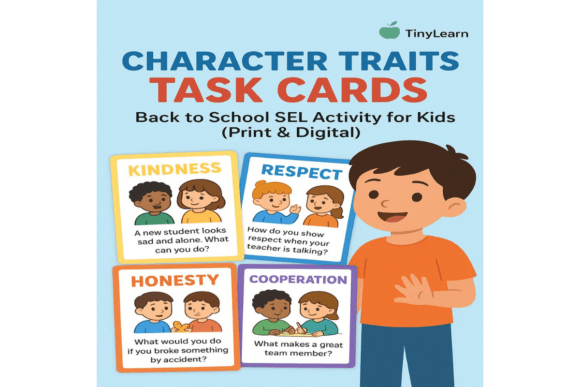
Character Traits Task Cards for Grades 1–3
The first weeks of school set the tone for the entire academic year. For educators, this period is less about curriculum pacing and more about building a community where students feel safe, valued, and ready to learn. One of the most effective tools for establishing this foundation is a structured approach to Social Emotional Learning (SEL). That is where Character Traits Task Cards come into play. Designed specifically for grades 1–3, these resources transform abstract concepts like kindness and responsibility into tangible, actionable lessons that young learners can grasp immediately.
In a classroom environment, managing behavior and fostering positive interactions can be challenging without concrete strategies. These task cards offer a versatile solution, moving beyond simple rule-posting to active engagement. By integrating scenarios that require critical thinking and emotional reflection, teachers can guide students through the nuances of social dynamics. Whether used during morning meetings or as part of a literacy center rotation, these cards help normalize conversations about character development early on.
Building a Foundation with SEL Resources
Social Emotional Learning is no longer an optional add-on; it is a critical component of modern education. However, explaining complex traits to six- or seven-year-olds requires age-appropriate scaffolding. Character Traits Task Cards provide exactly that. Each card presents a kid-friendly prompt or scenario followed by a simple activity—write, draw, or discuss. This triad of activities ensures that students with different learning styles can engage meaningfully with the content.
Consider the trait of empathy. A traditional lecture might fall flat, but a task card presenting a scenario where a classmate drops their lunch tray invites immediate connection. The student can draw how they would react, write a supportive note, or discuss what feelings the other child might be experiencing. This practical application cements the concept far better than memorizing a definition. Similarly, traits like honesty and cooperation are explored through realistic situations that mirror daily classroom life, making the lessons relevant and memorable.
Key Features That Drive Engagement
What makes this specific resource stand out in a crowded market of educational materials? First, the versatility of the design is unmatched. The pack includes 44 pages of content, offering enough variety to sustain interest throughout the semester without repetition becoming stale. The layout is clean and inviting, ensuring that even early readers can navigate the prompts with minimal assistance.
- Multi-Modal Activities: The inclusion of writing, drawing, and discussion options caters to diverse learner needs, ensuring inclusivity in every lesson.
- Scenario-Based Learning: Real-world contexts help students apply abstract values to their actual experiences.
- Flexible Implementation: The cards work seamlessly for independent work, small group collaboration, or whole-class instruction.
- Comprehensive Coverage: From respect to responsibility, the collection covers the essential pillars of character education.
For professionals looking to streamline their planning process, the ease of use is a significant advantage. There is no need for extensive preparation or complex setup. Teachers can simply pull a card at the start of a meeting, and the lesson begins. This efficiency allows educators to focus more on facilitating the conversation and less on managing logistics.
Practical Applications Beyond the Classroom
While the primary audience for Character Traits Task Cards is elementary education, the principles behind them extend into various professional and personal environments. Parents seeking to reinforce positive behaviors at home will find these prompts invaluable for family discussions. Tutors working one-on-one with children can use them to build rapport and address behavioral challenges proactively.
In a broader commercial context, creators and publishers recognize the value of high-quality, ready-to-use educational assets. For entrepreneurs in the ed-tech space, understanding the mechanics of successful SEL tools provides insight into user experience design. The success of these cards lies in their simplicity and directness—a principle that applies to software interfaces, marketing copy, and product design alike. When a tool reduces friction and delivers immediate value, adoption rates increase naturally.
Furthermore, the emphasis on communication skills translates well into corporate training for soft skills. While the language is tailored for children, the underlying framework of scenario-based problem solving is universal. Leaders who understand how to break down complex interpersonal dynamics into manageable exercises often find greater success in team building and conflict resolution.
Strategies for Effective Implementation
To get the most out of Character Traits Task Cards, integration should be intentional rather than sporadic. Consistency is key when building habits. Here are a few practical ways to incorporate them into your routine:
- Morning Meetings: Start the day by selecting a card that addresses a specific goal for the week. Use it to set a positive intention before diving into academics.
- Literacy Centers: Place a stack of cards in a reading corner. Students can rotate through them independently, using the writing or drawing prompts to reflect on stories they have read.
- Behavioral Interventions: If a specific issue arises, such as sharing difficulties, pull the corresponding card to facilitate a targeted group discussion.
- Take-Home Extensions: Send a card home with students to encourage parent-child dialogue about character traits outside of school hours.
Evaluating the effectiveness of these tools is straightforward. Observe changes in student interactions, listen for the vocabulary shifting in hallway conversations, and monitor the frequency of conflicts. Over time, you will likely notice a shift from reactive discipline to proactive character building. The visual nature of the cards also serves as a constant reminder of classroom expectations, reinforcing the culture you are trying to create.
Maximizing Value and Usability
When selecting resources for character education, quality matters as much as quantity. A resource that is visually appealing yet pedagogically sound offers the best return on investment. The 44-page structure of this particular pack ensures depth without overwhelming the user. It strikes a balance between providing enough material for long-term use and keeping the scope manageable for busy educators.
For those considering digital distribution or creating similar content, the design principles here are worth noting. Clear typography, uncluttered layouts, and intuitive instructions enhance usability. In an era where attention spans are short, especially among young learners, removing cognitive load allows the core message to shine. This focus on user experience is what separates effective educational tools from generic worksheets.
Ultimately, the goal of using Character Traits Task Cards is to help students build strong character, one card at a time. By making the start of the school year fun and meaningful, educators lay the groundwork for a year of growth, resilience, and community. Whether you are a seasoned teacher, a homeschooling parent, or an educational content creator, investing in tools that prioritize social emotional well-being yields dividends that last far beyond the final bell.